
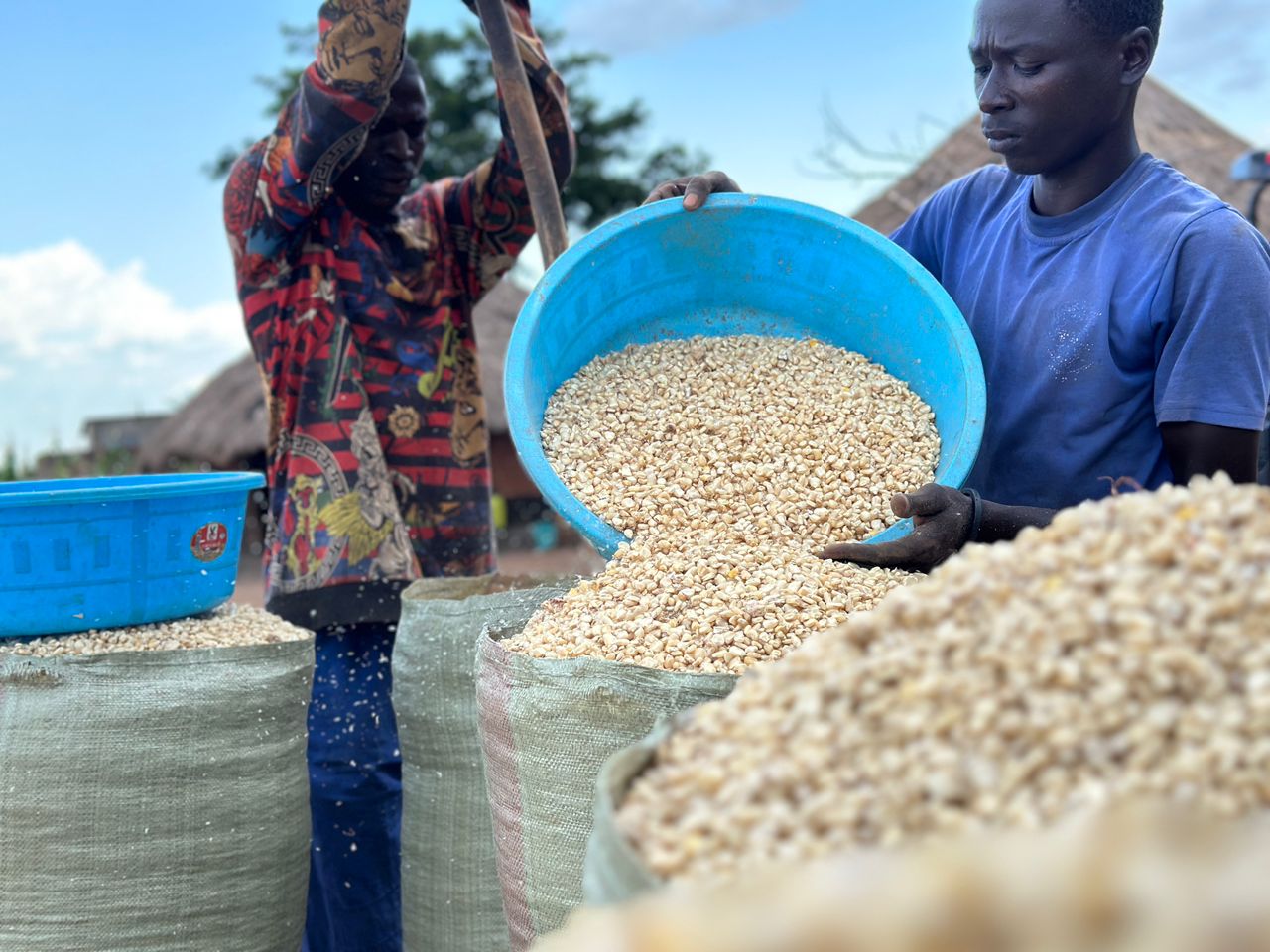
Every season, many farmers lose money after the harvest. The maize grows well in the garden. But after harvest, it gets wet, it rots, or insects eat it. Some of it also gets aflatoxin. This article tells you how to keep your maize safe from harvest day until you sell it.
What is aflatoxin?
Aflatoxin is a poison. A mould (fungus) makes it when maize stays wet or warm for too long. You cannot see it, smell it or taste it. Cooking does not remove it.
Why this is important:
- It can cause liver disease and cancer in people.
- It can cause children to grow slowly (stunting).
- It makes chickens, pigs and cows sick.
- Buyers and aggregation points test for it. They reject maize with too much aflatoxin, or they pay a lower price.
Step 1: Harvest at the right time
Harvest when the maize is mature and the cobs hang down. Do not leave the maize in the garden for a long time after it is mature. Rain and insects can damage it there.
Why: Maize that stays in the garden too long gets wet again and again. This gives the mould time to grow.
Step 2: Do not dry maize on bare ground
Dry your maize on a tarpaulin, a clean mat, or a raised platform. Do not put it directly on the soil.
Why: The mould that makes aflatoxin lives in the soil. Maize on bare ground also absorbs water from the soil.
Step 3: Dry the maize well
- Dry the cobs first. Then shell them.
- Spread the grain in a thin layer.
- Turn the grain many times each day.
- Cover the grain at night and when rain starts.
Most buyers want maize at 13% moisture or less. Dry maize makes a sharp "click" sound when you bite it or shake it in your hand.
Step 4: Do the salt test
You do not need a machine to check if your maize is dry. Use this simple test:
- Get a clean, dry glass bottle with a lid.
- Fill it about one third with maize grain.
- Add two to three spoons of dry salt.
- Close the lid and shake for 2 to 3 minutes.
- Look at the bottle.
If the salt sticks to the maize or to the bottle, the maize is still wet. Dry it more. If the salt does not stick, the maize is dry enough to store.
Why it works: Salt absorbs water. Wet grain gives water to the salt, and the salt becomes sticky.
Step 5: Sort your maize
Remove grains that are rotten, broken, discoloured or damaged by insects. Also remove stones, cobs and dirt.
Why: Most of the aflatoxin is in the bad grains. When you remove them, the rest of the maize is safer. Clean maize also gets a better grade and a better price.
Step 6: Store the maize correctly
- Use clean bags. Hermetic (airtight) bags are the best choice.
- Put the bags on wooden pallets. Do not put them on the floor.
- Keep the bags away from the walls.
- Keep the store dry, cool and with a good roof.
- Check your maize every week for insects, bad smell or heat.
Why: A floor or a wall can pass water into the bags. Hermetic bags stop air from entering, so insects die and the grain stays dry. They cost more than normal bags, but you can use them for many seasons.
Summary
Good maize is dry, clean and sorted. Remember these key points:
- Harvest on time.
- Never dry on bare ground.
- Dry to 13% moisture or less.
- Use the salt test.
- Sort out bad grains.
- Store off the floor and away from walls.
When your maize is ready, bring it to your nearest Maizey aggregation point. Safe maize protects your family, and it gets you a better price.